Starting a new Shopify store in 2026 is both an exciting opportunity and a formidable challenge. The global eCommerce market has crossed the $6 trillion mark, yet the majority of new stores struggle to generate consistent revenue within their first year. At Storeware, we have worked with hundreds of Shopify merchants across different niches, geographies, and business models. We know firsthand what separates stores that scale from stores that stall.
In this guide, we are sharing the most actionable, data-backed eCommerce growth strategies that new Shopify store owners can implement right now. Whether you have just launched your store or are in the pre-revenue stage, these strategies cover every dimension of growth, from technical setup and SEO foundations to conversion rate optimization, paid advertising, retention marketing, and beyond.
Think of this blog as your complete 2026 playbook. We have organized it from the ground up, so you can follow it sequentially or jump to the section most relevant to your stage of growth.
1. Laying the Right Foundation for eCommerce Growth Strategies
Most new store owners rush to launch and start running ads. That is a costly mistake. The first 90 days of a Shopify store are about building a foundation that every future growth initiative will rest on. A shaky foundation means wasted ad spend, poor conversion rates, and high churn. A strong foundation multiplies every dollar and every effort you put in later.
1.1 Choose Your Niche with Precision
In 2026, generalist stores are fighting an uphill battle against Amazon, Walmart, and well-funded incumbents. Niche stores win because they can speak directly to a specific audience, command premium pricing, and build a genuine community.
Before you invest in marketing, validate your niche against three criteria:
- Demand validation: Use Google Trends, keyword research tools, and Reddit or Facebook groups to confirm that real people are actively searching for and talking about your product category.
- Competition mapping: Analyze your top five competitors. If every competitor has 10,000+ reviews and massive budgets, you need a sharper angle. Find the underserved subsegment.
- Margin viability: Ensure your product margins after COGS, shipping, and platform fees can support paid customer acquisition. Generally, a minimum 50% gross margin gives you room to grow.
1.2 Build Your Store for Trust and Speed
Shopify gives you an excellent platform, but the way you set it up determines whether visitors trust you enough to buy. In 2026, consumer trust signals have become more important than ever, largely because of the explosion of dropshipping stores with poor quality.
Trust-building essentials every new store needs:
- Professional custom domain: Never launch on a myshopify.com subdomain.
- SSL certificate: Shopify provides this by default. Make sure it is active.
- About Us page: Tell your real story. Customers buy from people, not faceless companies.
- Clear return and shipping policies: Ambiguity kills conversions. Be specific about timelines and processes.
- Customer reviews and UGC: Even a handful of authentic reviews dramatically lifts conversion rates.
| Storeware Insight: Our data shows that Shopify stores with complete trust signals (About page, policy pages, reviews, and verified payment badges) see 23% higher average conversion rates compared to stores missing even two of these elements. This is not a nice-to-have. It is a growth lever. |
1.3 Page Speed: The Silent Conversion Killer
Google’s Core Web Vitals and the Largest Contentful Paint (LCP) metric directly impact both your SEO rankings and your paid ad Quality Scores. More importantly, studies consistently show that a one-second delay in page load time reduces conversions by 7%. For mobile commerce, which now accounts for over 70% of eCommerce traffic, speed is non-negotiable.
Key optimizations to prioritize:
- Compress all product images without losing quality (use WebP format)
- Minimize third-party app scripts that bloat your theme
- Use a fast, lightweight Shopify theme built for performance
- Enable lazy loading for images below the fold
- Audit and remove unused Shopify apps regularly
2. Shopify SEO in 2026: Building Organic Traffic That Compounds
Organic search remains one of the highest-ROI growth channels for eCommerce. Unlike paid advertising, the traffic you earn through SEO does not vanish the moment you stop spending. It compounds over time. In 2026, with AI-powered search results (SGE), Answer Engine Optimization (AEO), and Generative Engine Optimization (GEO) reshaping how people discover products, your SEO strategy needs to go beyond traditional keyword stuffing.
2.1 Keyword Strategy Built for Intent
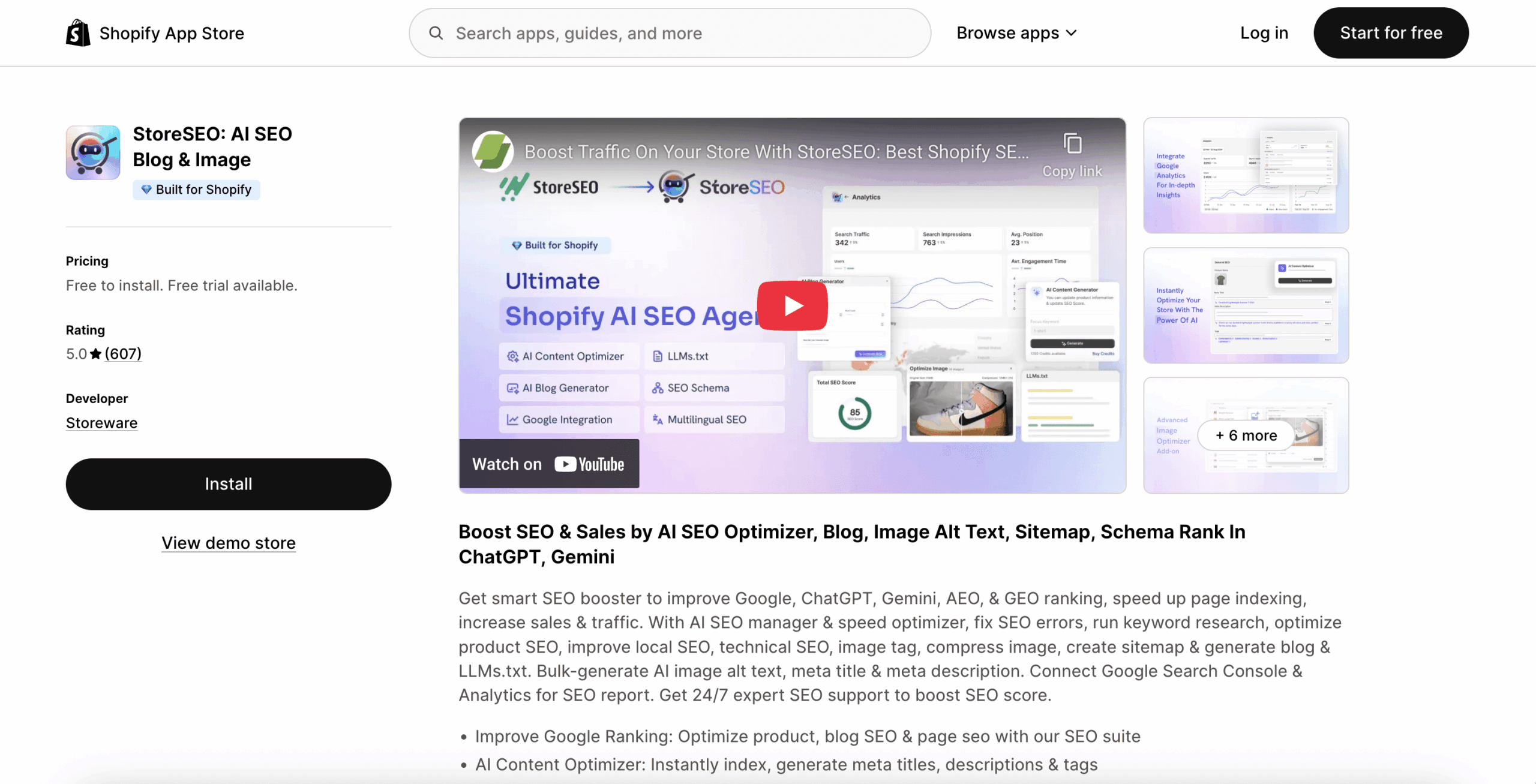
Effective Shopify SEO starts with a trusted Shopify SEO app with AI-powered features to align with your understanding of search intent. Every keyword your potential customer types falls into one of four categories: informational, navigational, commercial, or transactional. New stores should prioritize commercial and transactional keywords for product and collection pages, while building informational content such as blog posts and guides that target top-of-funnel audiences and build topical authority. This dual approach drives both immediate conversions and long-term organic growth.
2.2 On-Page SEO for Product and Collection Pages
Your product pages are your primary revenue-generating assets. They deserve the same SEO attention as any content piece. Here is a practical checklist:
- Write unique, keyword-rich product titles (avoid manufacturer defaults)
- Craft product descriptions that answer buyer questions and incorporate semantic keywords naturally
- Optimize meta titles and meta descriptions for click-through rate, not just rankings
- Use structured data (schema markup) for products, including price, availability, and review ratings
- Add descriptive, keyword-rich alt text to every product image
- Implement breadcrumb navigation for better site structure
Collection pages are often underoptimized. Add a descriptive intro paragraph above the product grid and a longer content section below it. This provides search engines with rich context about the page’s topic while helping customers find helpful guidance.
2.3 Answer Engine Optimization (AEO) and Generative Engine Optimization (GEO)
Here is where 2026 SEO diverges significantly from traditional practices. AI-powered search engines like Google SGE, Perplexity, and Microsoft Copilot are increasingly pulling answers directly from websites into search results. To get featured in these AI-generated responses, you need to optimize for AEO and GEO.
What this means practically:
- Structured FAQ sections: Add FAQ schema to product pages and blog posts. Answer the specific questions your audience is asking.
- Conversational content: Write in natural language that answers complete questions, not just fragments.
- Entity optimization: Build topical authority by creating comprehensive content clusters around your core topic, not isolated pages.
- Cite your expertise: AI systems favor content that demonstrates clear expertise, authority, and trustworthiness (E-E-A-T).
- Fast, clean HTML structure: AI crawlers favor well-structured pages with clear headings, short paragraphs, and logical information hierarchy.
| Pro Tip from Storeware: Create a dedicated FAQ page that mirrors the exact questions your customers ask in support tickets and social media. This is low-hanging fruit for AEO. These pages consistently generate featured snippet placements and AI answer inclusions with minimal link-building effort. |
2.4 Technical SEO Fundamentals
Even the best content strategy is undermined by technical SEO issues. For new Shopify stores, these are the most common technical mistakes we see:
- Duplicate content: Shopify creates duplicate URLs for products that appear in multiple collections. Use canonical tags to consolidate.
- Missing XML sitemap: Shopify auto-generates a sitemap. Submit it to Google Search Console immediately after launch.
- Broken internal links: Audit these monthly, especially after adding or removing products.
- Incorrect robots.txt: Do not accidentally block important pages from crawlers.
- Slow mobile experience: Google uses mobile-first indexing. Test your mobile Core Web Vitals every month.
3. Conversion Rate Optimization: Turning Visitors Into Buyers
Driving traffic to your store is only half the equation. The other half is converting that traffic into paying customers. Conversion Rate Optimization (CRO) is the discipline that addresses this, and it is one of the highest-leverage activities any Shopify store owner can invest in. Improving your conversion rate from 1.5% to 3% effectively doubles your revenue without spending an extra dollar on traffic.
3.1 Optimizing the Product Page for Maximum Conversions
Your product page is where purchase decisions are made or abandoned. Every element needs to work in concert to guide the visitor toward a confident buying decision.
High-converting product pages share these characteristics:
- Clear, benefit-focused headlines: Lead with what the product does for the customer, not just what it is.
- High-quality images and video: Show the product in context, from multiple angles, with a size reference. Video increases conversion rates by up to 80% on product pages.
- Social proof above the fold: Display your star rating and number of reviews directly beneath the product title.
- Urgency without manipulation: Real stock levels, real countdown timers, and real limited offers work. Fake scarcity destroys trust.
- Clear, prominent Add to Cart button: Use a high-contrast color. Make it the most visually dominant element on the page.
- Trust badges: Secure checkout, money-back guarantee, and free returns near the CTA button.
3.2 Cart and Checkout Optimization
Shopping cart abandonment averages 70% across eCommerce. That means 70 out of every 100 people who add a product to their cart never complete the purchase. Recovering even a fraction of these abandoners represents significant revenue.
Proven cart and checkout optimization tactics:
- Enable Shopify’s one-page checkout, which significantly reduces abandonment
- Offer guest checkout without forcing account creation
- Display a progress bar in checkout to show customers how close they are to completing the order
- Show total cost, including shipping and taxes, early in the checkout process, never surprise customers with fees
- Enable multiple payment options: credit card, PayPal, Shop Pay, Apple Pay, Google Pay
- Send automated abandoned cart email sequences (the first email within 1 hour converts best)
3.3 Site Search Optimization
Internal site search is often overlooked, but it is a remarkably high-intent behavior. Customers who use your search bar convert at 3 to 5 times the rate of non-searchers. Yet most new stores have a poorly configured search function that returns irrelevant results.
Optimize your site search by:
- Ensuring your search returns results for misspellings and synonyms
- Setting up redirects for high-volume searches to relevant collection or product pages
- Analyzing your search query data monthly to identify new product opportunities or content gaps
- Featuring top-selling or high-margin products in your search results
4. Paid Advertising for New Shopify Stores: Starting Smart
Many new store owners make the mistake of throwing money at ads before their store is conversion-ready. The result is predictably disappointing: high ad spend, low returns, and a belief that paid advertising does not work. Paid advertising works exceptionally well, but only once your store can convert the traffic it receives.
4.1 Meta Ads (Facebook and Instagram): Still the Best Starting Point
Despite increasing competition and rising CPMs, Meta’s advertising platform remains the most powerful tool for new eCommerce stores because of its unparalleled audience targeting capabilities and visual ad formats that suit product marketing.
A smart Meta Ads strategy for new stores:
- Start with a broad audience: Meta’s algorithm has become remarkably capable at finding buyers when given sufficient data. Over-restricting your audience limits learning.
- Run awareness and retargeting simultaneously: Top-of-funnel cold traffic campaigns and bottom-of-funnel retargeting campaigns serve different purposes and should both run from day one.
- Test creatives relentlessly: The creative is the most important variable in Meta ads. Test at least three to five creatives per campaign.
- Use Advantage+ Shopping Campaigns: Meta’s AI-powered shopping campaigns have consistently outperformed manual setups for most product categories.
- Budget for learning: Expect the first four to six weeks to be a learning phase with suboptimal returns. Do not kill campaigns too early.
4.2 Google Shopping and Performance Max
Google Shopping is where purchase-intent traffic lives. When someone searches ‘buy [product name]’, they are ready to buy. For new Shopify stores, the recommended approach:
- Set up Google Merchant Center and connect it to your Shopify store via the Google Sales Channel app
- Optimize your product feed: accurate titles, descriptions, images, and pricing are essential for Google Shopping to serve your ads correctly
- Start with a Standard Shopping campaign to gather data before moving to Performance Max
- Use Performance Max campaigns once you have at least 30 to 50 conversions in your account
- Segment products by margin: bid more aggressively on high-margin products
4.3 TikTok Ads: The New Customer Acquisition Channel
TikTok has emerged as one of the fastest-growing eCommerce advertising platforms in 2025 and 2026, particularly for brands targeting audiences under 40. TikTok Shop integration with Shopify has made it even more powerful, allowing in-app purchases directly from TikTok videos.
What works on TikTok Ads for eCommerce:
- Authentic, unpolished UGC-style video ads dramatically outperform branded productions
- Hook viewers in the first two seconds: lead with the problem or the wow moment
- Spark Ads (amplifying organic content that performs well) often deliver a strong ROI
- Capitalize on trending sounds and formats while keeping your product message clear
| Storeware Note Many of our clients using Storeware’s theme and app ecosystem report that their TikTok-driven traffic converts significantly better after implementing structured product pages with video embeds and social proof elements. Your landing page quality has a multiplier effect on every ad channel you invest in. |
5. Email and SMS Marketing: Your Most Profitable Revenue Channel
Email marketing delivers an average ROI of $36 to $42 for every dollar spent. Nothing in digital marketing comes close to that number. In 2026, with rising paid acquisition costs, owned channels like email and SMS are not just important. They are essential to building a sustainable, profitable Shopify store.
5.1 Building Your Email List from Day One
Do not wait until you have thousands of visitors to start building your email list. Start capturing emails on day one with a well-crafted opt-in incentive.
Proven list-building methods for new stores:
- Welcome pop-up with discount offer: A 10 to 15% first-purchase discount or free shipping offer in exchange for an email address is the most consistently effective tactic.
- Exit-intent popups: Trigger a pop-up when a visitor is about to leave. Offer them a compelling reason to stay or subscribe.
- Embedded forms in blog content: If you are publishing educational content, offer a related content upgrade in exchange for an email.
- Post-purchase opt-in: During checkout, offer to opt customers into marketing emails.
5.2 Essential Email Automation Flows
Before you start sending broadcast campaigns, set up these foundational automation flows. They run on autopilot and generate revenue continuously:
- Welcome Series (3 to 5 emails): Introduce your brand, share your story, highlight your best products, and make a compelling offer to convert new subscribers.
- Abandoned Cart Series (3 emails): Send at 1 hour, 24 hours, and 72 hours after abandonment. Include product imagery, social proof, and an escalating offer.
- Post-Purchase Series: Confirm the order, set expectations, follow up with cross-sell and upsell recommendations, and request a review.
- Win-Back Campaign: Re-engage subscribers who have not opened or clicked in 60 to 90 days before removing them from your active list.
- Browse Abandonment: Trigger an email when a subscriber views a product but does not add it to the cart. Gentler than cart abandonment but still highly effective.
5.3 SMS Marketing: The 98% Open Rate Channel
SMS marketing has become a powerful complement to email for eCommerce stores. With open rates consistently above 95% and response rates far exceeding email, SMS is particularly effective for time-sensitive communications like flash sales, back-in-stock alerts, and shipping updates.
SMS best practices for Shopify stores:
- Always get explicit consent before sending SMS (compliance is non-negotiable)
- Keep messages short, direct, and personalized
- Include a clear CTA with a trackable link
- Limit promotional SMS frequency to two to four times per month to avoid unsubscribes
- Use SMS for high-urgency messages: flash sales, order updates, limited stock alerts
6. Social Media and Content Marketing: Building Brand Equity
In a crowded market, brand equity is your most durable competitive advantage. Customers who have a genuine connection with your brand buy more frequently, spend more per order, and refer their friends. Content marketing and social media are how you build that equity at scale.
6.1 Choosing the Right Channels for Your Brand
You do not need to be on every social platform. Choose one or two primary channels where your target audience is most active and commit to producing genuinely valuable content there.
A quick channel guide for Shopify stores in 2026:
- Instagram: Best for visually-driven lifestyle brands, fashion, beauty, food, and home decor. Reels continue to have the best organic reach.
- TikTok: Best for brands with a product story to tell, younger audiences, and high entertainment or educational value.
- Pinterest: Underutilized but extremely high-intent for home, fashion, DIY, and gifting categories. Long content lifespan, unlike other platforms.
- YouTube: Best for products that benefit from demonstration, tutorials, or review content. Excellent long-term SEO value.
- LinkedIn: Best for B2B eCommerce stores and brands selling to professionals.
6.2 Content Marketing: The Long Game That Always Pays Off
A well-executed content marketing strategy drives organic traffic, builds topical authority, and creates assets that continue to generate value for years. For Shopify stores, the most effective content formats are:
- Buyer’s guides and comparison articles: ‘Best [product type] for [specific use case]’ articles capture high-intent commercial searches and convert exceptionally well.
- How-to and tutorial content: Demonstrate expertise while attracting informational search traffic that you can convert with strategic CTAs.
- Product-focused SEO blogs: Write about the problems your products solve. Optimize for long-tail keywords with clear purchase intent.
- User-generated content campaigns: Encourage customers to share their experiences. Reshare and amplify the best content to build social proof at scale.
7. Customer Retention: The Most Overlooked Growth Strategy
Every eCommerce operator has heard that acquiring a new customer costs five to seven times more than retaining an existing one. Yet most new store owners spend 90% of their growth budget on acquisition and almost nothing on retention. This is backwards.
Increasing customer retention by just 5% can increase profits by 25% to 95% (Bain and Company research). For new Shopify stores, building retention systems from the start means your customer acquisition costs become investments rather than expenses.
7.1 Loyalty Programs: Turn One-Time Buyers into Brand Advocates
A well-designed loyalty program incentivizes repeat purchases, increases average order value, and transforms customers into active brand advocates. In 2026, customers across all demographics expect some form of loyalty reward from brands they shop with regularly.
Effective loyalty program mechanics for Shopify stores:
- Points for purchases: The foundational mechanic. Award points on every dollar spent, redeemable for discounts on future orders.
- Tiered rewards: Create Bronze, Silver, and Gold tiers with escalating benefits. Tier status creates powerful status motivation.
- Points for actions: Award points for writing reviews, referring friends, following on social media, and celebrating birthdays.
- Referral bonuses: Give both the referrer and the referred friend a meaningful reward. Referral programs can dramatically reduce your paid customer acquisition cost.
7.2 Post-Purchase Experience: The Moment Most Brands Forget
The purchase is not the end of the customer journey. It is the beginning of the relationship. The post-purchase experience, from order confirmation to delivery to product unboxing, shapes whether a customer comes back.
How to create a memorable post-purchase experience:
- Send a personal, warm order confirmation email (not just a transactional receipt)
- Provide proactive shipping updates that exceed expectations
- Include a handwritten note or personalized packaging insert where possible
- Follow up two weeks after delivery to check on satisfaction and gently request a review
- Offer a meaningful repeat purchase incentive in your post-purchase sequence
| Storeware Recommendation: Storeware’s suite of Shopify apps includes tools specifically designed to enhance the post-purchase experience, from customizable thank-you pages to automated review request sequences. Merchants using our post-purchase tools report an average 18% increase in repeat purchase rate within 90 days. Learn more at storeware.io. |
7.3 Customer Segmentation: Stop Sending Everyone the Same Message
Not all customers are equal, and treating them as if they are wastes your marketing budget and trains customers to ignore your communications. Segment your customer list and personalize your messaging accordingly.
The most impactful customer segments for Shopify stores:
- VIP customers (top 20% by spend): Give them early access, exclusive offers, and personalized outreach. Protect this segment fiercely.
- At-risk customers (no purchase in 60 to 90 days): Target with a compelling win-back campaign before they churn completely.
- New customers (first purchase within 30 days): This segment needs extra nurturing to build the habits that drive repeat purchasing.
- High-frequency, low-AOV customers: Identify opportunities to increase their average order value through bundles and upsells.
8. Shopify Apps and Tech Stack: Choose Wisely
One of the most powerful and most dangerous aspects of Shopify is its app ecosystem. With over 8,000 apps available in the Shopify App Store, you can add virtually any functionality to your store. The danger is that many new store owners install too many apps, slowing down their store and paying for features they do not need.
8.1 The Lean App Stack for New Stores
As a new Shopify store, your app stack should be lean and purposeful. Here is a recommended starting point organized by function:
- Reviews and social proof: Judge.me, Loox, or Okendo for collecting and displaying product reviews.
- Email and SMS marketing: Klaviyo (best-in-class for segmentation and automation) or Omnisend (more beginner-friendly).
- Loyalty and referrals: Smile.io or LoyaltyLion for points, tiers, and referral programs.
- Upsell and cross-sell: ReConvert, AfterSell, or Zipify Pages for post-purchase upsells.
- SEO: Plug In SEO for identifying and fixing technical SEO issues.
- Subscription and recurring revenue: Recharge or Bold Subscriptions if your product category suits subscription models.
| Storeware Products: At Storeware, we build Shopify themes and apps specifically engineered for conversion performance and store speed. Our themes are crafted to be lean, fast, and optimized for the specific trust signals that drive purchase decisions in 2026. If you are setting up a new Shopify store and want to start with a performance-first foundation, explore our theme collection at storeware.io. |
8.2 Audit Your App Stack Quarterly
Every app you install adds JavaScript to your storefront, which can slow down your page speed. Set a quarterly reminder to audit your installed apps and remove anything you are not actively using. A lean app stack is a fast store, and a fast store converts better.
9. Data, Analytics, and Decision Making: Grow with Evidence
Gut feelings might identify opportunities, but data confirms them and guides you toward the highest-leverage actions. In 2026, the Shopify stores that scale fastest are those with a clear analytics setup and the discipline to review their numbers regularly.
9.1 Essential Analytics Setup for New Shopify Stores
Make sure these analytics tools are properly configured before you start driving meaningful traffic:
- Google Analytics 4 (GA4): The standard for web analytics. Set up enhanced eCommerce tracking to capture product impressions, clicks, add-to-carts, and purchases.
- Shopify Analytics: Your built-in dashboard for sales, traffic sources, conversion rates, and customer behavior. Review it weekly.
- Google Search Console: Monitor your organic search performance, identify ranking keywords, and catch technical SEO issues.
- Meta Pixel and Conversions API: Essential for tracking Meta ad performance, especially important in a post-iOS 14.5 world where browser-level tracking has limitations.
9.2 The KPIs Every Shopify Store Owner Should Track
Rather than drowning in data, focus on a core set of key performance indicators (KPIs) that actually drive decisions:
- Conversion rate: The percentage of visitors who complete a purchase. The industry average is 1 to 3%. Benchmark and improve monthly.
- Average Order Value (AOV): A Higher AOV means more revenue without more customers. Track the impact of upsell and bundle strategies on AOV.
- Customer Acquisition Cost (CAC): How much you spend to acquire each new customer. Compare against LTV to understand the health of your business.
- Customer Lifetime Value (LTV): The total revenue you expect from a customer over their relationship with your store. The higher your LTV, the more you can afford to spend on acquisition.
- Return on Ad Spend (ROAS): Revenue generated per dollar of ad spend. Monitor per channel to identify where to scale and where to cut.
- Email and SMS revenue contribution: What percentage of your total revenue comes from owned channels? Healthy Shopify stores typically see 30 to 40%.
10. Scaling Your Shopify Store: Moving from First Sales to Consistent Growth
Once you have validated your product, established your conversion baseline, and built initial traffic and email lists, you are ready to scale. Scaling means systematically amplifying what works, fixing what does not, and expanding into new channels and markets.
10.1 Identifying Your Scaling Triggers
Not every store is ready to scale at the same point. Before pouring more money into growth, confirm these readiness signals:
- Consistent conversion rate of 1.5% or above
- Positive ROAS on at least one paid channel
- Email automation flows are active and generating revenue
- Customer service processes are documented and can handle 3 to 5 times the current volume
- Inventory or production can scale with demand
10.2 Channel Diversification: Do Not Depend on One Source
The biggest growth risk for any Shopify store is over-dependence on a single traffic or revenue channel. When that channel changes its algorithm, raises its prices, or temporarily goes down, your entire business is affected. A resilient growth strategy diversifies across multiple channels.
Build toward a traffic mix that includes:
- Organic search (SEO): The compounding channel. Slow to start, powerful at scale.
- Paid social (Meta, TikTok): Scalable volume channel. Requires active management and creative refresh.
- Paid search (Google): High-intent channel with excellent purchase conversion rates.
- Email and SMS: The highest-ROI owned channel. Non-negotiable for sustainable profitability.
- Influencer and affiliate marketing: Performance-based channel that reduces risk versus fixed advertising costs.
- Organic social: Brand equity builder. Slower to convert but valuable for trust and community.
10.3 International Expansion with Shopify Markets
Shopify Markets has made it significantly easier for Shopify stores to sell internationally without building separate stores. Key considerations before expanding internationally:
- Identify markets where you are already receiving organic traffic or orders without active targeting
- Ensure you can handle shipping, returns, and customer service in target markets
- Use Shopify Markets to set local currencies, languages, and pricing
- Research and comply with local regulations, taxes, and consumer protection laws
11. The Role of AI and Automation in 2026 eCommerce Growth
Artificial intelligence has moved from a buzzword to a practical growth tool for eCommerce businesses of all sizes. In 2026, new Shopify store owners will have access to AI-powered tools that were previously only affordable for large enterprises.
11.1 AI-Powered Personalization
Personalization is one of the most powerful levers for increasing conversion rate and customer lifetime value. AI makes personalization scalable even for stores without large data science teams.
Practical AI personalization applications for Shopify:
- Product recommendation engines that show each visitor the products most relevant to their browsing history and purchase behavior
- Dynamic pricing and discount optimization based on customer segments
- Personalized email content blocks that adapt based on individual customer data
- AI-powered site search that understands natural language queries and returns contextually relevant results
11.2 AI for Content Creation and SEO
AI writing tools have dramatically reduced the cost and time required to produce SEO content at scale. New Shopify stores can use AI to generate product descriptions, blog post drafts, meta descriptions, and social media content. The most effective approach combines AI efficiency with human expertise. Use AI to generate first drafts and structural outlines, then apply your product knowledge, brand voice, and SEO intent to refine the content into something genuinely useful and differentiated.
11.3 Customer Service Automation
AI chatbots and automated support flows can handle a significant portion of common customer inquiries (order status, return policies, product FAQs) without human intervention. This reduces your support costs and improves response times, both of which have a measurable impact on customer satisfaction and repeat purchase rates.
12. Common Mistakes New Shopify Stores Make (And How to Avoid Them)
We have worked with enough Shopify stores to have seen the same mistakes repeated over and over. Knowing these pitfalls in advance can save you months of wasted effort and thousands of dollars.
- Launching without a marketing plan: ‘Build it, and they will come’ does not apply to eCommerce. Have a clear acquisition strategy before you launch.
- Killing ad campaigns too early: Most new campaigns need four to six weeks of data before optimizing. Stopping at week two almost always leads to poor decisions.
- Ignoring mobile experience: Over 70% of your traffic will come from mobile. Test every element of your store on multiple mobile devices.
- Not building an email list: Many store owners realize the value of their email list only after they have lost their primary traffic source. Start building it on day one.
- Pricing too low: Competing on price is a race to the bottom. Compete on value, story, and experience. Price confidently.
- Neglecting customer service: One bad review that goes unaddressed can cost you dozens of potential customers. Respond to every review, positive and negative.
- Copying competitors exactly: Your competitive advantage should come from genuine differentiation. Understand your competitors, but do not imitate them.
- Over-investing in apps: More apps means slower stores and higher monthly costs. Be ruthless about app ROI.
Conclusion: Your 2026 Shopify Growth Roadmap
Growing a new Shopify store in 2026 requires a holistic approach that combines technical excellence, smart marketing, genuine customer relationships, and data-driven decision-making. There is no single magic tactic that will 10x your revenue overnight. What works is systematically executing the fundamentals with discipline and patience.
Here at Storeware, we are committed to building the tools, themes, and apps that help Shopify merchants at every stage of growth. From performance-first themes that maximize conversion rates out of the box, to apps designed to enhance post-purchase experience and retention, our products are built with one goal in mind: helping your Shopify store grow faster and more profitably.
The strategies outlined in this guide are not theoretical. They are drawn from real work with real Shopify stores across industries and geographies. Implement them thoughtfully, measure your results, iterate based on data, and you will build a Shopify store that not just survives in 2026 but thrives.
Your growth story starts now. Let us help you write it.
| Ready to Build a High-Performance Shopify Store? Explore Storeware’s collection of conversion-optimized Shopify themes and growth apps, engineered specifically for the 2026 eCommerce landscape. Visit storeware.io to get started |
Frequently Asked Questions
What are the most important Shopify growth strategies for beginners in 2026?
The most important growth strategies for new Shopify stores in 2026 are: building a conversion-optimized store with clear trust signals, implementing SEO from day one, setting up email marketing automation flows, running targeted paid ads on Meta or Google, and building a customer retention system. Starting with the right Shopify theme and app stack also significantly impacts your baseline conversion performance.
How long does it take for a new Shopify store to become profitable?
Most new Shopify stores take 6 to 12 months to reach consistent profitability. Stores that invest in both paid acquisition and organic growth (SEO and content marketing) simultaneously tend to reach this milestone faster. Stores that rely solely on paid ads often struggle with profitability until they build their email list and improve their customer retention metrics.
What is the best marketing channel for a new Shopify store?
There is no single best channel. For immediate results, Meta Ads offer the best combination of audience targeting and scalability. For long-term compounding growth, SEO is the highest-ROI channel. For direct revenue with zero ongoing ad spend, email marketing consistently delivers the best returns once you build a substantial list. The best strategy uses all three in combination.
How much should a new Shopify store spend on advertising?
Most growth advisors recommend allocating 10-20% of your target monthly revenue to paid advertising. For new stores in the validation phase, a minimum test budget of $1,000 to $2,000 per month on Meta Ads or Google Shopping gives the algorithm enough data to optimize. Avoid spreading a small budget across too many channels simultaneously.
What Shopify apps are essential for a new store?
The essential apps for a new Shopify store are a reviews app (like Judge.me or Loox), an email marketing platform (Klaviyo or Omnisend), an upsell and cross-sell app, and an SEO audit tool. Beyond these four categories, each additional app should be evaluated on clear ROI. Avoid installing apps you are not actively using, as they slow down your store.
How does Answer Engine Optimization (AEO) differ from traditional SEO for Shopify stores?
Traditional SEO focuses on ranking pages for specific keywords in Google’s blue link results. AEO focuses on getting your content featured within AI-generated answer summaries in Google SGE, Perplexity, and similar platforms. For Shopify stores, this means structuring content to directly answer specific questions with clear, concise language, using FAQ schema markup, and building topical authority through comprehensive content clusters.
How can Storeware help my new Shopify store grow?
Storeware provides conversion-optimized Shopify themes and growth-focused apps built specifically for the needs of modern Shopify merchants. Our themes are engineered for speed, trust, and conversion performance. Our apps target high-impact growth levers, including post-purchase optimization, review collection, and retention marketing. Whether you are launching your first store or scaling an established one, Storeware’s products give you a competitive foundation.